by Sebastien GOULARD
The sixth edition of the World Nomad Games was held in Kyrgyzstan from 29 August to 6 September. This sporting competition, held every two years since 2014, provides an opportunity to highlight the culture of nomadic peoples, particularly those of Central Asia. This edition received considerable media attention due to the simultaneous holding of the 26th summit of the Shanghai Cooperation Organisation in Kyrgyzstan. Heads of state from around the world were present in the capital, Bishkek, at the time.
A Competition Open to the World
The creation of the World Nomad Games in 2014 received particularly strong support from Kyrgyzstan’s President, Almazbek Atambayev, who saw the event as a tool for promoting his country to the rest of the world. Four of the six editions of the World Nomad Games have been held in Kyrgyzstan.
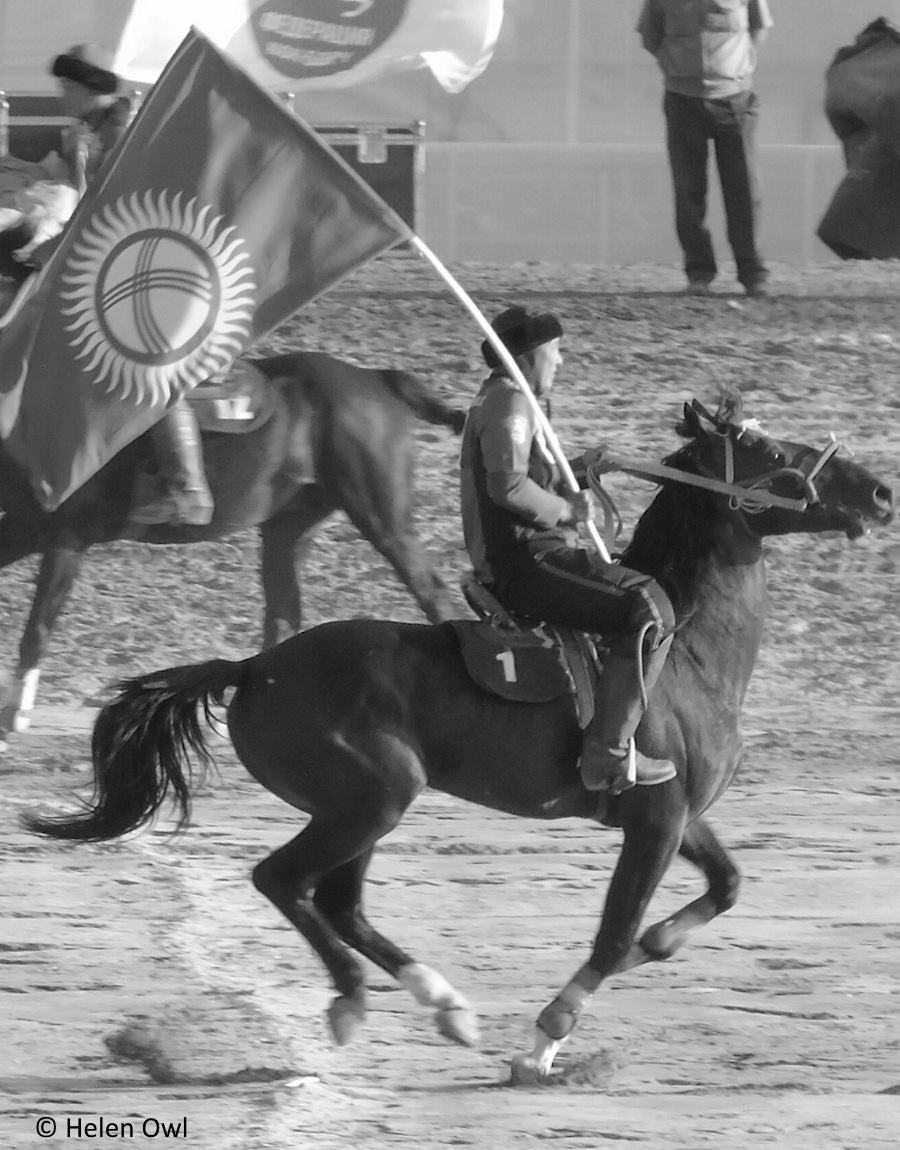
The event brought together athletes from more than one hundred countries, competing in around forty different disciplines. It provided an opportunity to discover Ordo, a precision game played with sheep bones, as well as the equestrian game of Kok-Boru and various forms of traditional wrestling. In this edition, Kyrgyzstan won the most medals, followed by Kazakhstan and Russia.
Tourism Development
Unlike its neighbours, Kyrgyzstan does not possess hydrocarbon reserves and therefore seeks to develop its tourism sector in order to support its economic development. It is promoting an authentic form of tourism built around its landscapes and culture. In 2025, nearly 5.3 million foreign visitors travelled to Kyrgyzstan, particularly to go hiking and discover its nomadic traditions. President Sadyr Japarov would like to cooperate with neighbouring countries to establish a single visa for visitors wishing to travel to Central Asia.
A Return to Local Traditions After Russian Colonisation
This event, which showcases Kyrgyzstan’s traditional culture, enables Bishkek to develop new partnerships. In recent years, Central Asia has witnessed an affirmation of local cultures in response to the region’s Russian cultural heritage. This process of “decolonisation” appears to have intensified since Russia’s aggression against Ukraine. In Kazakhstan, President Kassym-Jomart Tokayev is pursuing a policy aimed at reviving the country’s Kazakh cultural heritage. This includes giving less prominence to the Russian language in favour of Kazakh. The new constitution, which has been in force since July 2026, places Russian “alongside” Kazakh rather than giving the two languages equal status. Kazakhstan’s shift from the Cyrillic alphabet to the Latin alphabet is a source of tension with Moscow. In Uzbekistan, the language issue also remains highly relevant, with part of the population seeking to strengthen the use of Uzbek at the expense of Russian.
Kyrgyzstan has not gone as far as its neighbours in the de-Russification of the country. Russian remains the second official language alongside Kyrgyz, which continues to be written in the Cyrillic alphabet (although the issue remains debated). Russia’s aggression against Ukraine led to the arrival of a very large number of young Russians seeking to escape the war in Kyrgyzstan, which has not been without causing difficulties. The Kyrgyz government has recently decided to exercise greater control over and restrict the presence of Russian citizens on its territory. As researcher Bakyt Dzhenyshpekova notes, Kyrgyzstan has also seen a growing questioning of the use of the Russian language in the public sphere. Highlighting the country’s nomadic cultural heritage reinforces this process of decolonisation and enables the population to engage with its history.
Through the organisation of the sixth World Nomad Games, Kyrgyzstan is also strengthening its relations with other partners, particularly states that share languages belonging to the Turkic language family. Kyrgyzstan is one of the founding members of the Organization of Turkic States, established in 2009, whose objective is to promote development and cooperation among its members. This organisation, whose latest informal summit was held in Kazakhstan in May 2026, is opening up new avenues for cooperation, particularly in logistics, connectivity and artificial intelligence, a topic discussed at the latest summit. This framework provides Kyrgyzstan with an opportunity to diversify its partnerships and pursue a development policy consistent with the culture of its people.

Sebastien GOULARD
Sebastien Goulard is a consultant at Cooperans, a consultancy specializing in international relations.
He is also the founder of Diplomarty.
Sebastien Goulard holds a doctorate in economic and social development from Ecole des Hautes Etudes en Sciences Sociales (School for Advanced Studies in the Social Sciences), Paris. He has been involved in several European research programs focusing on sustainable urbanization in China.