
by Sebastien GOULARD
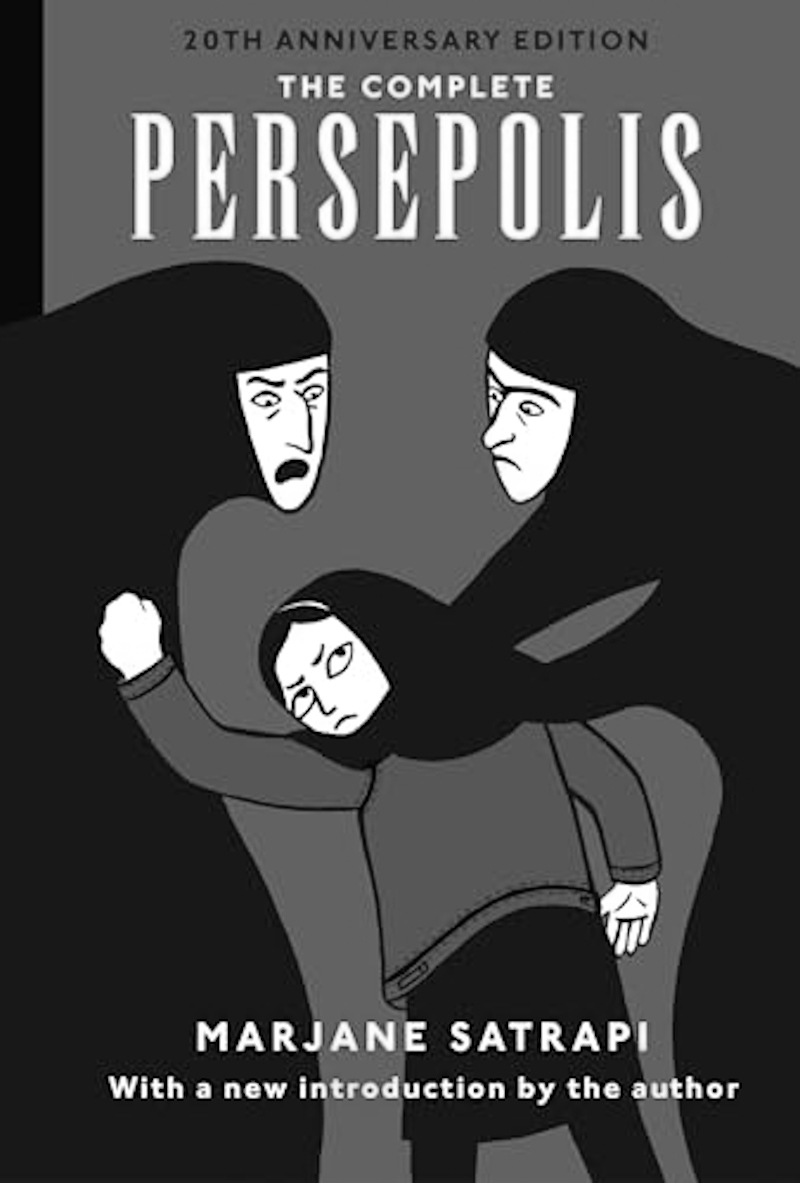
Franco-Iranian artist Marjane Satrapi passed away on June 5, 2026. A graphic novelist and filmmaker, she notably shared her own story and that of her family during the Iranian Revolution, which she transformed into her masterpiece, Persepolis. This autobiographical work was first published as a graphic novel between 2001 (Volume One) and 2003 (Volume Four), before being adapted into an animated feature film in 2007. Satrapi was subsequently awarded the Jury Prize at the Cannes Film Festival. Her graphic novel was translated into around fifteen languages and sold more than four million copies worldwide, including nearly one million in France. It achieved significant success in the United States, where it is included in the curricula of certain university programs. Likewise, the film attracted more than 1.2 million admissions in France upon its release and was screened in numerous countries. In France, screenings have also been organized in schools, where the film has been praised for its many qualities and for its message of women’s emancipation.
A Work That Provokes Discomfort
However, even at the time of the film’s release, some dissenting voices, albeit a minority, made themselves heard. These criticisms mainly originated from Iran. Iranian President Mahmoud Ahmadinejad described the film as “Islamophobic” and “anti-Iranian.” Some festival directors also chose not to screen the film in order to avoid offending Iranian authorities. Yet even in Tehran, the film was shown, albeit with several scenes removed by censors who deemed them too sexually explicit.
Over the past twenty years, however, the context has evolved. Following the announcement of the author’s death, reactions became far more intense. The days when Persepolis was universally celebrated by media outlets and political figures, particularly in Western countries, are long gone. In France, the Head of State and the government paid tribute to “the memory of a great artist who transformed an Iranian childhood into a universal fable.” The entire political spectrum honored her legacy; one voice, however, was noticeably more restrained: that of La France Insoumise (LFI), the left-wing party led by Jean-Luc Mélenchon. LFI has remained relatively discreet in its reactions to the many acts of violence committed by the Iranian regime against its own people, particularly Iranian women. When Iran was shaken by demonstrations in January 2026, led by a younger generation protesting the repression imposed by the mullahs, LFI leaders saw them primarily as protests against the rising cost of living.
Similar reactions occurred in other countries, where Satrapi’s feminist figure was accused of colonialism and Islamophobia.
An Artist Committed to Iranian Youth
These reactions may be explained by the fact that Marjane Satrapi had become a prominent figure in the struggle against the Iranian regime and a supporter of the “Woman, Life, Freedom” movement. In 2023, she edited a collective volume bearing that title in order to raise awareness among the French public about the cause.
Her name had been proposed for France’s highest civilian distinction, the Légion d’Honneur, but Satrapi declined the award as a sign of disagreement with President Emmanuel Macron. The artist criticized France for continuing to grant visas to individuals connected to leaders of the Islamic Republic. She openly advocated the downfall of Iran’s Islamic regime.
A Success for Tehran
The lack of responsiveness from part of the Western left and from segments of the younger generation represents a success for the Islamic Republic of Iran. In the span of twenty years, Marjane Satrapi’s work—which once symbolized the struggle for women’s rights—has come to be labeled Islamophobic. The defense of Iranian women is no longer a major cause for many young Westerners, who now prioritize other equally legitimate causes, such as the rights of Palestinians and Muslim minorities in Europe. Tehran’s political choices have shifted the attention of part of the Western left away from developments in Iran and toward the Israeli-Palestinian conflict.
The Satrapi case illustrates that while Iran may not possess all the technological means necessary to confront its adversaries in the Middle East crisis, it occupies a strong position on the cultural front. Tehran’s association with the Palestinian cause has enabled it to silence criticism from part of the Western left, and one consequence has been a growing neglect of the plight of Iranian women.
Woman, Life, Freedom.

Sebastien GOULARD
Sebastien Goulard is a consultant at Cooperans, a consultancy specializing in international relations.
He is also the founder of Diplomarty.
Sebastien Goulard holds a doctorate in economic and social development from Ecole des Hautes Etudes en Sciences Sociales (School for Advanced Studies in the Social Sciences), Paris. He has been involved in several European research programs focusing on sustainable urbanization in China.