
by Sebastien GOULARD
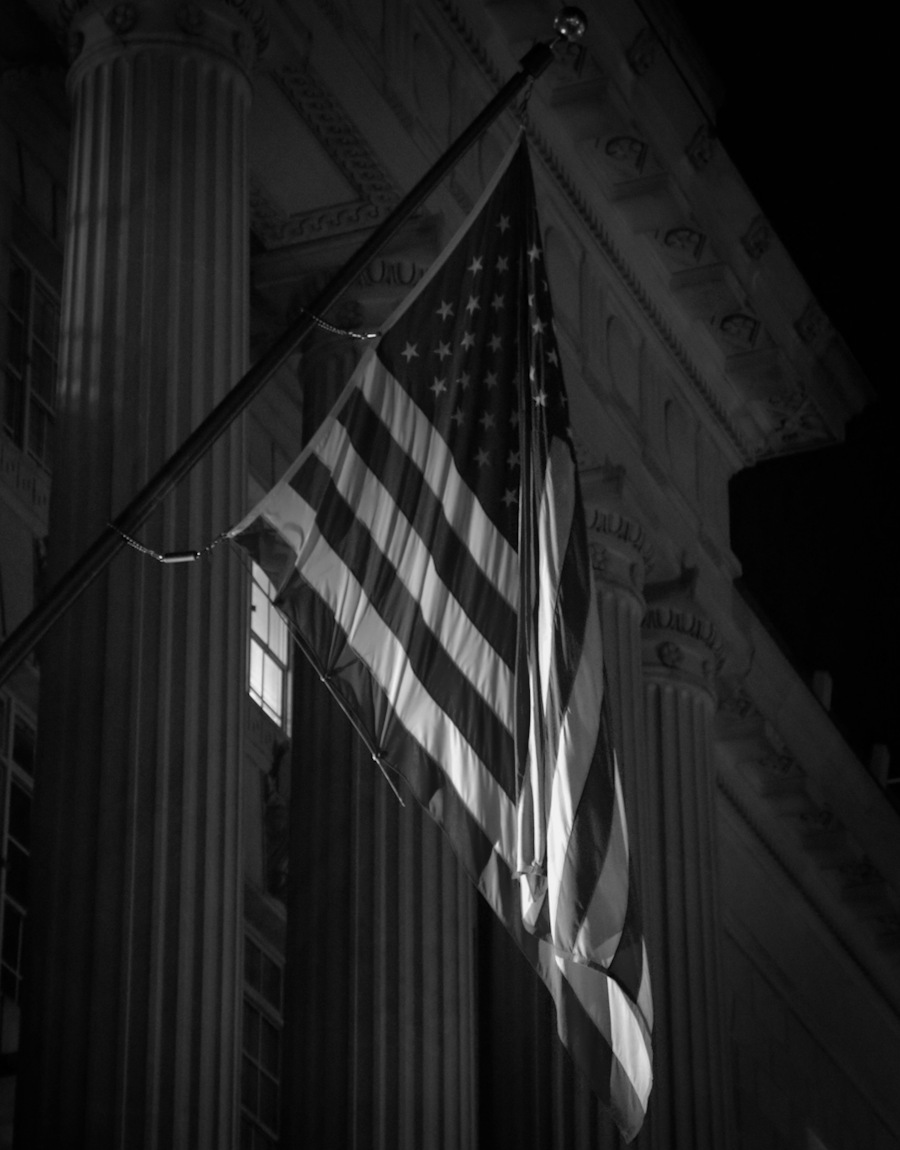
The United States is celebrating the 250th anniversary of its Declaration of Independence this year. Yet, in a country known for its larger-than-life celebrations, the event does not seem to be generating much enthusiasm. Although the U.S. national anthem has been played during the FIFA World Cup matches, this global sporting event has not served as a platform for the anniversary of American independence, partly because of U.S. policies that have at times been controversial under the Trump administration.
A Passport to Patriotism: 250 Years of American Diplomacy
One of the most ambitious exhibitions marking the anniversary, entitled Passport to Patriotism: 250 Years of American Diplomacy, is organized by the U.S. Department of State and is being held at the Art Museum of the Americas in Washington, D.C., until October 18. The exhibition brings together works by 30 contemporary artists who offer their own perspectives on the United States. Among them are Sophia Bounou, Lyle Owerko, Barbara Ernst Prey, Kyler Steele, and Katarina Benzova. Their works all convey a highly patriotic and colorful vision of America.
Despite the richness of the works on display, the exhibition has attracted considerable criticism. The first criticism is that, despite its title, the theme of “American diplomacy” is not addressed at all. For Christina Cauterucci of Slate, the exhibition is overly simplistic: it offers no critical examination of America, and its message is limited, relying on a nostalgic vision of the United States. In that respect, she argues, it reflects the policies pursued by Donald Trump.
The exhibition has also been criticized for being heavily influenced by people close to the president. It was not overseen by curators or historians and stems from Donald Trump’s desire to present a more “joyful” vision of American history. At the same time, the U.S. president had accused the Smithsonian Institution of presenting an overly critical and inaccurate view of the United States. The controversy has led many observers to point to the exhibition’s lack of independence.
A Two-Headed Organization
This lack of enthusiasm and ambition surrounding the anniversary may stem from a leadership issue, since two organizations are responsible for its coordination. Initially, the celebrations were supposed to be led by America250, a bipartisan organization created by Congress. Another initiative, Freedom 250, is also involved in organizing major events related to the celebrations.
Freedom 250 is an initiative supported by the National Parks Foundation, but in practice it is managed by the White House’s Task Force 250, that is, by President Trump and his advisers. The more political nature of this structure may have complicated the preparation of certain events: artists have withdrawn from concerts, while several states, including Vermont and Oregon, have refused to be associated with the initiative.
This competition over the way the anniversary is commemorated has fueled considerable debate in both American and international media. HuffPost, for instance, notes that America250 promotes American values, whereas Freedom 250 places greater emphasis on faith. Concerns have also been raised about the possible lack of transparency surrounding the funding of the White House-backed initiative.
However, this controversy is mainly visible in Washington and in certain circles. Across the many cities and communities of the United States, the 250th anniversary of the Declaration of Independence has been celebrated as it should.
How Is It Being Received Abroad?
The anniversary is also being celebrated abroad, particularly through the network of U.S. embassies. In France, Paris City Hall is decorated with American flags, while several ambitious exhibitions at the Musée Carnavalet, the Palace of Versailles, and in La Rochelle are marking 250 years of Franco-American friendship in 2026. These exhibitions seek to demonstrate that, despite the tensions generated by the Trump administration, Franco-American relations remain strong and solid.
Yet abroad, there is particular interest in examining the legacy of the American War of Independence. The Trump administration has changed the picture, and the United States has become less inspiring. We are no longer looking at a conquering America, but rather at a country that is increasingly turning inward, whose direction is becoming harder to understand. International media are questioning both traditional American constitutional values and those promoted by the Trump administration. This anniversary therefore seems to be prompting more questions about contemporary America than generating genuine enthusiasm.
In 2026 America, it seems difficult to turn this anniversary into a unifying moment around which all Americans could come together. The various events marking the 250th anniversary of American independence reflect the complexity of contemporary American society, as well as the Trump administration’s determination to take greater control of the cultural sector and put it at the service of the presidency, even at the risk of making it less meaningful.

Sebastien GOULARD
Sebastien Goulard is a consultant at Cooperans, a consultancy specializing in international relations.
He is also the founder of Diplomarty.
Sebastien Goulard holds a doctorate in economic and social development from Ecole des Hautes Etudes en Sciences Sociales (School for Advanced Studies in the Social Sciences), Paris. He has been involved in several European research programs focusing on sustainable urbanization in China.