by Sebastien GOULARD
On June 29, luxury giant Louis Vuitton won its trademark infringement lawsuit against the Chinese bubble tea chain Molly Tea. The Suzhou Intermediate People’s Court ordered the Chinese company to pay RMB 10.3 million (€1.3 million) in damages to LVMH and to modify its current logo. Molly Tea may appeal the ruling.
Louis Vuitton is one of the world’s most frequently counterfeited brands, and LVMH has long pursued a strict policy of protecting its intellectual property against potential infringers. However, this legal victory against Molly Tea could ultimately prove detrimental to the French luxury group.
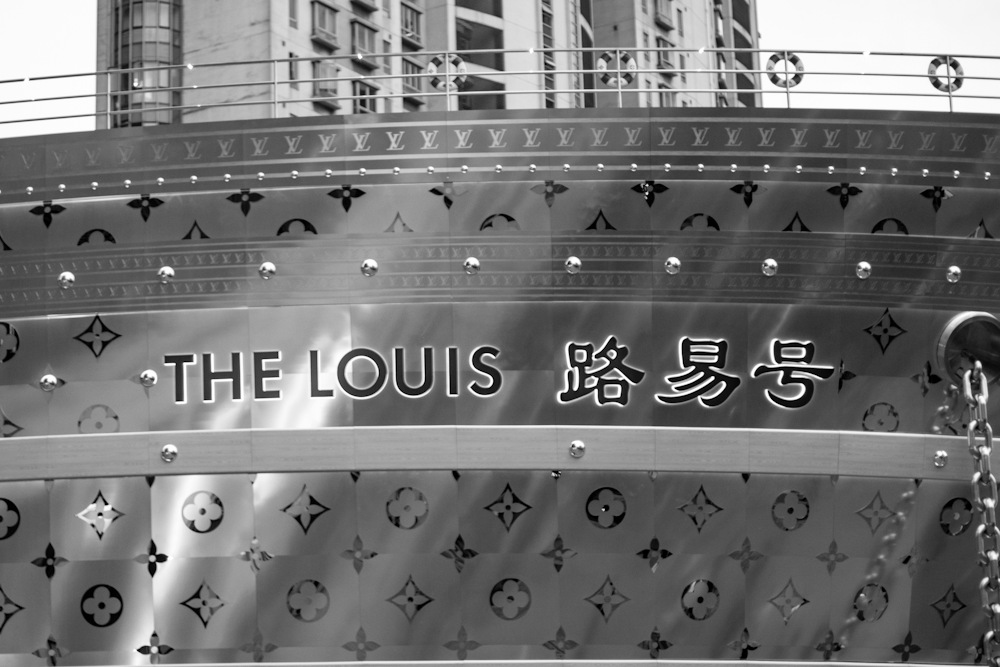
Today, Louis Vuitton is an iconic brand, instantly recognizable around the world. Its interlocking “L” and “V” monogram has become synonymous with luxury, prestige, and elegance, embodying the heritage of a company founded in 1854. Throughout its history, Louis Vuitton has remained highly committed to protecting its brand identity and has initiated numerous legal actions against trademark infringement. This rigorous enforcement of its intellectual property rights is intended to deter potential infringers.
However, LVMH’s lawsuit against Molly Tea comes at a particularly sensitive moment. First, the French group decided to take legal action because the Chinese company has been expanding internationally. Founded in Shenzhen in 2021, the bubble tea chain has already opened outlets across North America, London, and Southeast Asia. It is no longer a purely domestic brand, and LVMH argues that consumers could confuse its logo with that of Molly Tea, as both feature a four-petaled flower. Furthermore, since 2024, Molly Tea has been collaborating with L’Oréal, which, like LVMH, operates in the luxury cosmetics sector.
Although LVMH prevailed in court, the dispute could have significant repercussions for the group in China. China’s luxury market has been experiencing stagnation, if not a slight decline, with foreign brands being among the first to feel the impact. For several years, Chinese consumers have increasingly shifted away from international luxury brands in favor of domestic companies that are perceived as being more deeply rooted in Chinese history and culture.
In the case of the dispute between LVMH and Molly Tea, several Chinese influencers have argued that the four-petaled flower featured in the contested logo is, in fact, a traditional Chinese symbol. Some have gone even further, claiming that it was LVMH that drew inspiration from the Baoxiang flower, a Buddhist decorative motif commonly found in traditional Chinese art, or from a pattern dating back to the Tang Dynasty (618–907 AD). (In reality, the flower used by Louis Vuitton is inspired by the Art Nouveau movement.) As a result, the French luxury group has been accused of cultural appropriation and is now facing boycott threats promoted by nationalist Chinese influencers.
The “small” company Molly Tea, much like David facing Goliath, has won the sympathy of many Chinese consumers. While Guangxi Province is currently suffering from severe flooding, the bubble tea chain has donated RMB 10 million to the city of Hengzhou, one of the areas most severely affected by the disaster.
How Should LVMH Respond?
To avoid alienating its Chinese customers, LVMH should respond swiftly to these boycott threats, which could damage the Louis Vuitton brand. As a first step, the company should donate all damages awarded in the lawsuit against Molly Tea to charitable organizations. Louis Vuitton should also pursue new collaborations with Chinese cultural institutions and contribute to the funding of events and exhibitions celebrating traditional Chinese arts.
At a time when nationalist sentiment is resurging in China, LVMH must strike a careful balance between protecting its trademarks and addressing accusations of cultural appropriation.

Sebastien GOULARD
Sebastien Goulard is a consultant at Cooperans, a consultancy specializing in international relations.
He is also the founder of Diplomarty.
Sebastien Goulard holds a doctorate in economic and social development from Ecole des Hautes Etudes en Sciences Sociales (School for Advanced Studies in the Social Sciences), Paris. He has been involved in several European research programs focusing on sustainable urbanization in China.