by Sebastien GOULARD
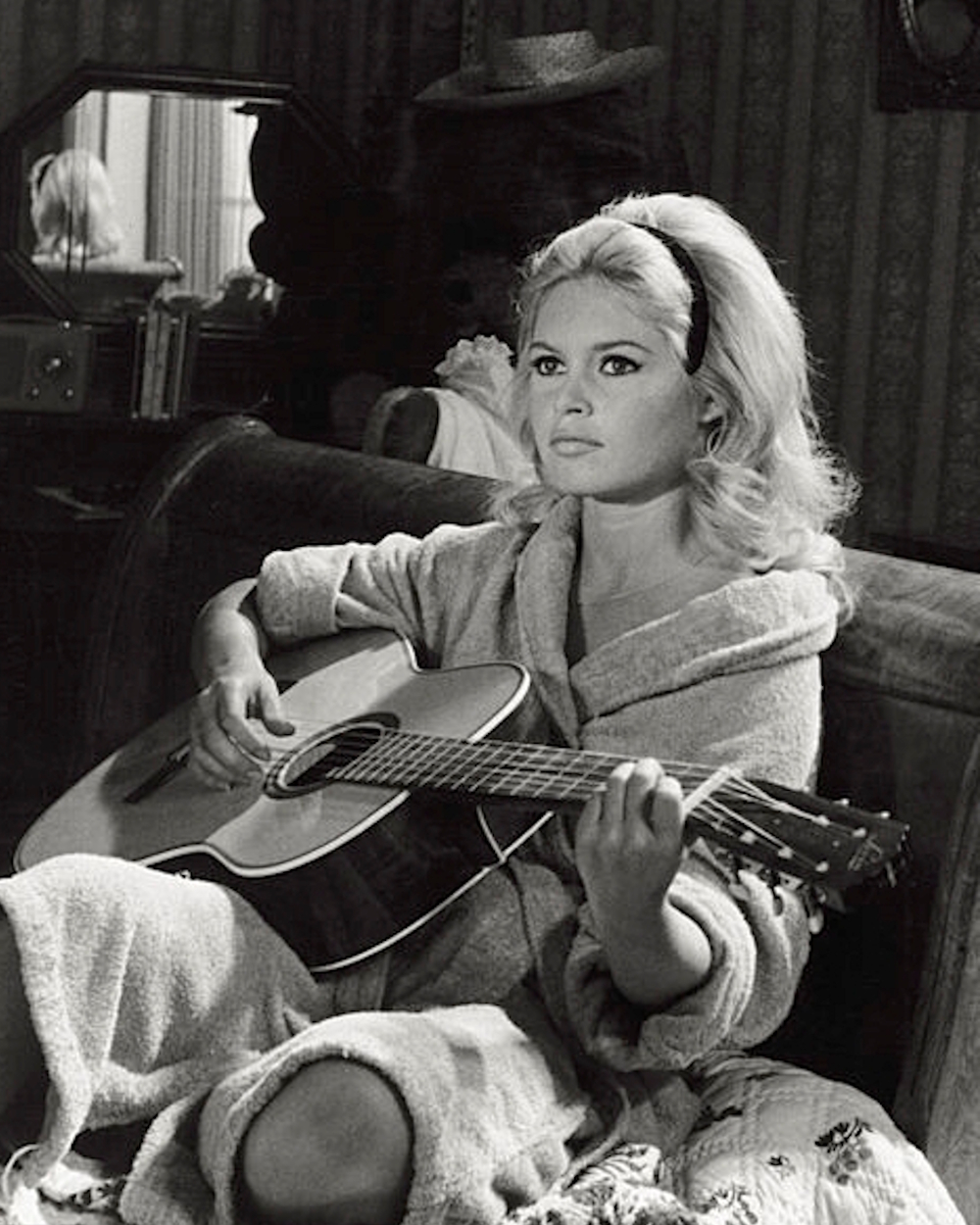
On 28 December 2025, the French actress Brigitte Bardot, an icon of the 1960s, passed away. Known worldwide by her initials “BB,” she began her career in the early 1950s and pursued it until 1973, appearing in films that left a lasting mark on world cinema, such as And God Created Woman by Roger Vadim and Contempt by Jean-Luc Godard. Beyond her filmography, it was her way of life, her beauty, and her freedom that made BB a global icon.
Following the announcement of her death, American actresses such as Jennifer Aniston, Catherine Zeta-Jones, and Christie Brinkley paid tribute to the strong woman Brigitte Bardot was.
In France, political figures—including the Head of State, Emmanuel Macron—honored the memory of this remarkable woman. However, tributes were more subdued, particularly on the left, due to the actress’s conservative positions on issues such as immigration or the “Me Too” movement.
A Free and Liberated Woman
Even today, Brigitte Bardot is regularly ranked among the most beautiful women of the 20th century, alongside Marilyn Monroe, Grace Kelly, and Sophia Loren. Her figure, revealed in films such as Contempt or at the Cannes Film Festival—where she was among the first actresses to wear a bikini as early as 1952, which she would go on to popularize among young women around the world—captivated audiences. She became the embodiment of feminine beauty, but also of the sexual revolution.
At a time when Hollywood productions were still subject to the prudish Hays Code until 1968, censoring any sexual connotation in cinema, European films were freer, notably through the French New Wave. Brigitte Bardot symbolized this freedom, which also reflected the spirit of the era. She adopted the hippie style and helped popularize destinations such as Saint-Tropez on the French Riviera and Búzios in Brazil.
But Brigitte Bardot was not merely a sex symbol who set and broke trends; she made decisions and stood by her choices. As such, she embodied her time and became a pop-culture icon. Andy Warhol portrayed her in the same way he had already depicted Marilyn Monroe and Elizabeth Taylor. Brigitte Bardot fascinated the world.
Despite requests from Hollywood studios and from Steve McQueen, who offered her a role in The Thomas Crown Affair, BB chose to focus on her career in France and Europe. In 1965, however, 20th Century Fox produced Dear Brigitte, starring James Stewart and entirely devoted to her image, though Brigitte Bardot herself played only a minor role. Similarly, the French film industry criticized some of her artistic choices, and not all of her films were successful. Yet the actress was not one to be dictated to: she acted only in films that interested her, and thus refused to become a Bond girl.
This freedom led her to withdraw from film sets in 1973, at a time when she still enjoyed immense popular appeal. Cinema was never Brigitte Bardot’s true passion; she cared far more deeply for animals.
A Committed Personality
Brigitte Bardot put her fame at the service of animal welfare. She became particularly known for her campaign against the slaughter of baby seals in Canada beginning in 1976. Following her activism, the French government banned the import of seal skins, and from 1983 onward this ban was extended to the entire European market thanks to the actress’s lobbying efforts.
Earlier, Brigitte Bardot had drawn attention to the conditions under which animals were slaughtered by bleeding without prior stunning, advocating instead for the use of captive-bolt pistols, which were widely adopted in France from 1972 onward—except for ritual slaughter, which Brigitte Bardot denounced throughout her life. She used her renown to advance her causes, initiating campaigns against the wearing of fur in fashion and against the consumption of dog meat, publicly denouncing South Korea during the 2006 FIFA World Cup. Other international stars followed in her footsteps; Pamela Anderson, for example, joined her in the fight against the slaughter of baby seals in Canada.
In this way, Brigitte Bardot helped pioneer celebrity engagement in major environmental causes, thereby silencing the injunction to “be beautiful and keep quiet.”
The Symbol of France
Beyond her fight for animal rights and the controversies sparked by her political opinions from the 1990s onward, Brigitte Bardot represented France and thus played a role in French diplomacy.
She physically embodied France by lending her features to the statue of Marianne sculpted by the artist Aslan in the 1960s. Busts bearing Brigitte Bardot’s likeness were displayed in town halls across France, making her the international icon of the French woman.
In the 1960s and 1970s, her youth, beauty, and charm enhanced France’s image abroad—not only in the United States, as already mentioned, but also in the USSR. Although few of her films were screened there due to censorship, the French actress became extremely popular among Soviet women, particularly the youth, who saw in Brigitte Bardot a symbol of freedom.
General Charles de Gaulle, President of the French Republic from 1959 to 1969, met her in 1967; at the time, they were the two most famous French figures in the world. Mutual respect prevailed, yet Paris never sought to influence the actress to serve French diplomacy directly. Nevertheless, her beauty, her character, and later her commitment to animal rights all contributed to promoting France’s image worldwide.
Relations between the actress and the presidents who succeeded General de Gaulle were less cordial. In 2013, when Brigitte Bardot threatened to take Russian nationality in protest against the possible euthanasia of two elephants at the Lyon zoo, she deeply moved the French public. However, following the war launched by Vladimir Putin against Ukraine in 2022, Brigitte Bardot consistently defended Ukraine and called for a European response.

Sebastien GOULARD
Sebastien Goulard is a consultant at Cooperans, a consultancy specializing in international relations.
He is also the founder of Diplomarty.
Sebastien Goulard holds a doctorate in economic and social development from Ecole des Hautes Etudes en Sciences Sociales (School for Advanced Studies in the Social Sciences), Paris. He has been involved in several European research programs focusing on sustainable urbanization in China.